News
China Proposes Export Controls on AI Models and Chip Tech
China's commerce ministry has published a draft plan to add 40 technologies to its export-control list, covering AI models, agents, chip design, and photovoltaics. Publicly available open-source work is exempt.
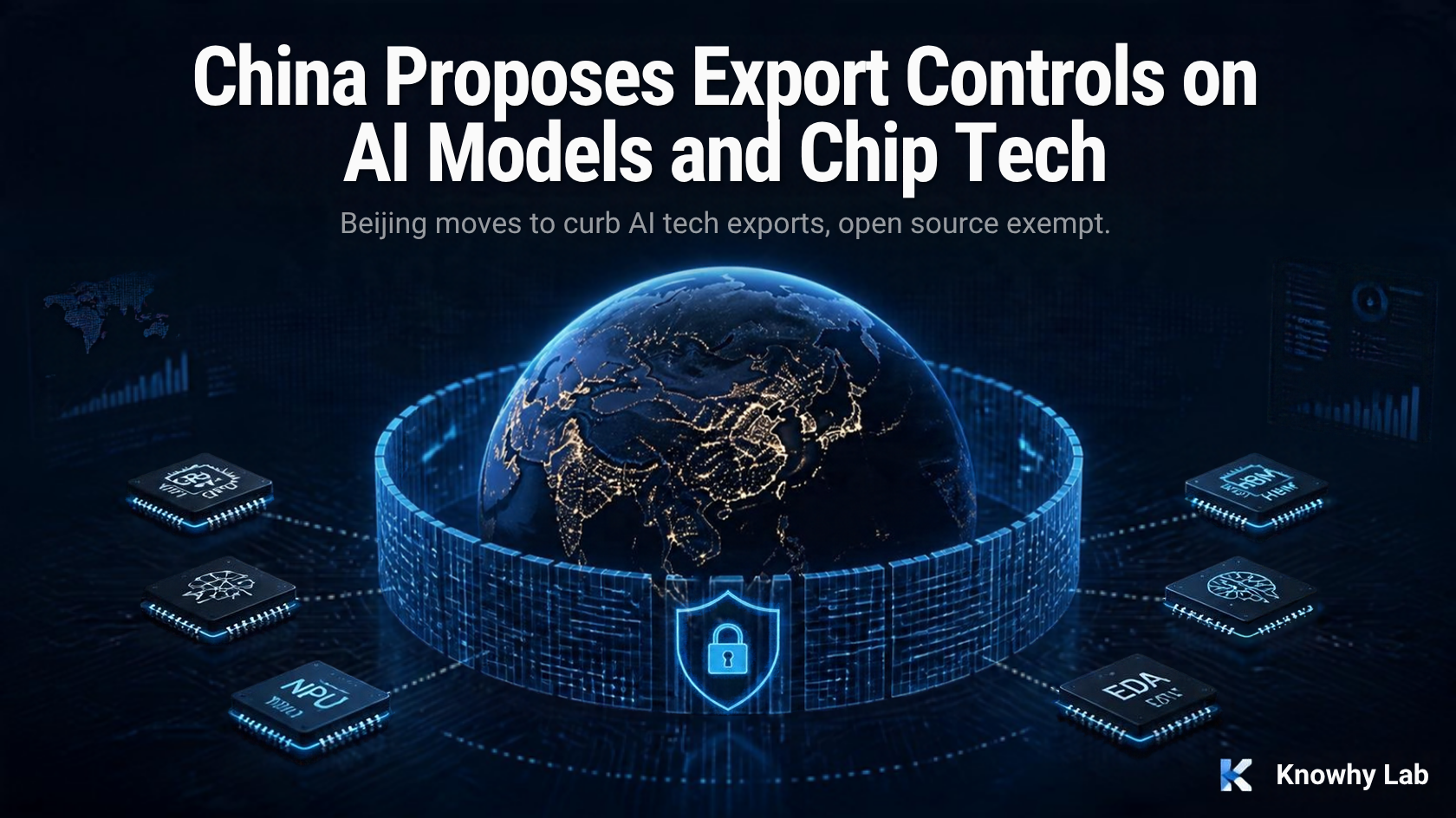
Draft Rules Target Core AI Capabilities
On October 16, 2026, China’s Ministry of Commerce released a draft plan. The plan adds 40 technologies to the country’s export-control catalog. These technologies span artificial intelligence, biomedicine, and photovoltaics. The ministry lists them as either prohibited or restricted from export.
The AI section is the largest. It covers 23 distinct technologies. This includes large language models, AI agents, chip designs, computing clusters, and information processing methods. The draft is now open for public comment. Reports indicate the comment period runs until November 15.
What Would Be Prohibited
The draft draws a clear line on certain AI exports. It would prohibit the export of core technologies behind large language models trained with national key sensitive data. It also targets AI agents that serve key national information infrastructure, national defense, and core government affairs.
These are specific categories. They do not cover all AI models. The focus is on systems tied to sensitive data or critical national functions. The wording suggests a security-driven approach rather than a blanket ban on all AI tech.
The Open-Source Carve-Out
There is a significant exception in the draft. Technologies already in the public domain will not face controls. This includes work released through open-source channels or published in academic papers.
This matters because Chinese open-weight models have become a major force globally. Labs like DeepSeek, Qwen, and GLM have released models that developers worldwide use. Under this draft, those existing releases would remain unaffected.
The carve-out is practical. Once code is public, it is hard to control. Trying to restrict it would be ineffective. The rule acknowledges that reality.
Why Now
The timing is not random. Chinese open-weight models have gained substantial traction. They are widely used in the global open-model ecosystem. Beijing has stated its aim to stop certain capabilities from “proliferating inappropriately,” per Nikkei.
This is a policy shift. Previously, China promoted AI exports and open collaboration. Now, the focus is on protecting specific high-value capabilities. The draft signals a more guarded stance on strategic technology.
The move aligns with broader trends. Many governments are tightening export controls on advanced tech. The United States has done so for chips. China is now applying similar logic to AI models and related infrastructure.
Scope Beyond AI
The draft is not limited to AI. It includes technologies in biomedicine and photovoltaics. The AI portion is the most detailed, but the other areas are part of the same control framework.
Biomedicine controls likely target specific research or manufacturing methods. Photovoltaics controls would affect solar technology exports. The exact lists are in the draft document, which the ministry has published for review.
The addition of these fields suggests a comprehensive approach. China is identifying strategic technologies across sectors. The goal is to manage how these capabilities leave the country.
What Happens Next
The public comment period runs until mid-November. After that, the ministry will review feedback. The final version may differ from the draft. Rules can be adjusted based on industry input.
Companies and researchers will watch closely. The open-source exemption is a key point. If it holds, most current model releases remain unaffected. If the final rules tighten that exemption, the impact could be significant.
The draft also raises questions about enforcement. Export controls require monitoring. How China will track violations is unclear. The draft does not detail enforcement mechanisms.
For now, this is a proposal. It is not law. The final scope and details are still open. But the direction is clear: China is moving to control the flow of its most advanced AI technology.
The global AI landscape may shift as a result. Developers who rely on Chinese open models will need to monitor the final rules. If the carve-out holds, little changes. If not, the open-model ecosystem could face disruption.
The ministry’s draft is a formal step. It shows intent. The next few weeks will reveal how the final controls take shape.