News
Apple Announces HomeView, Its First Smart Home Hub
Apple announced HomeView, its first smart home hub, along with a new HomePod mini, a faster Apple TV 4K, and a line of Apple-branded accessories made with LG and Schneider Electric.
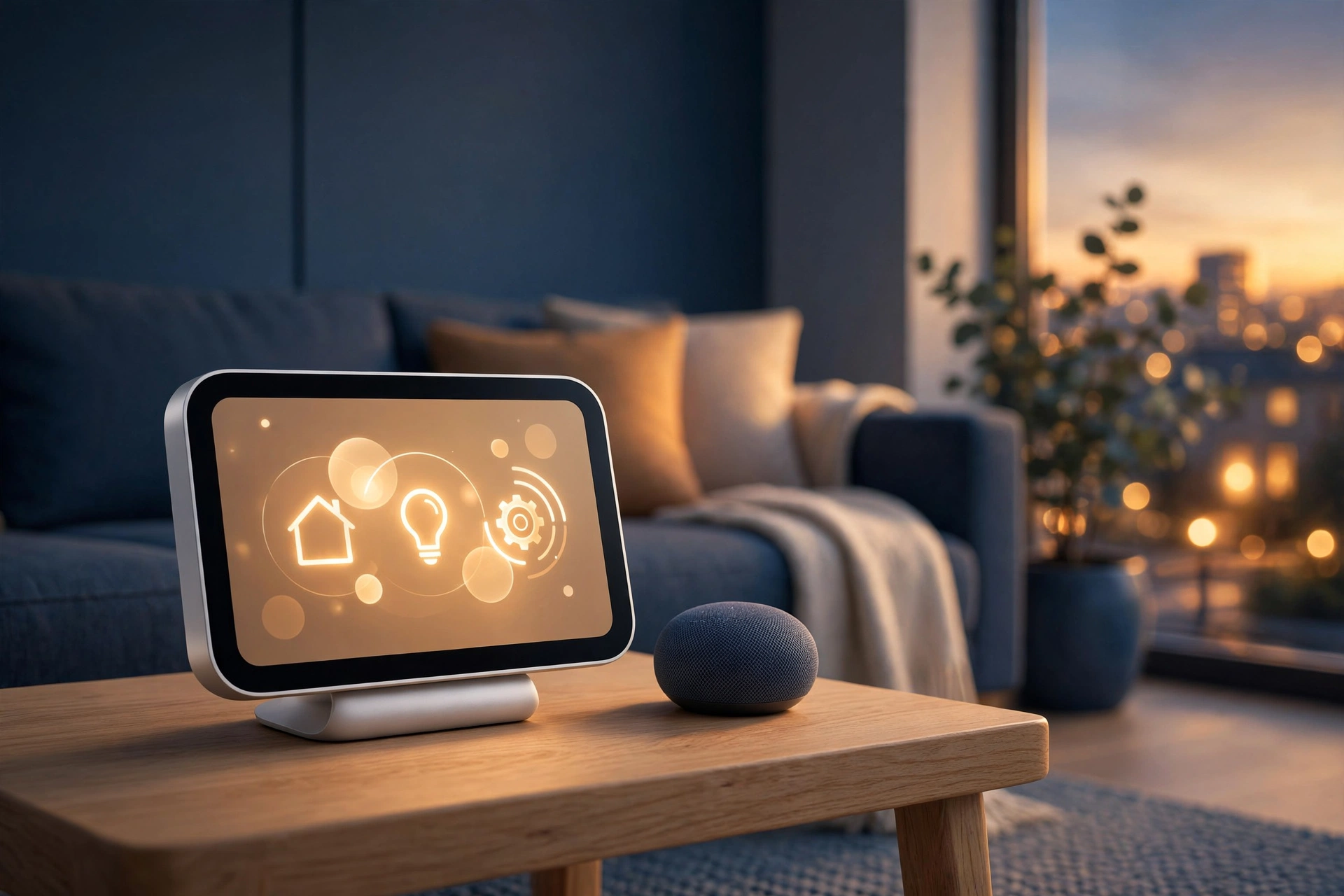
Apple announced its smart home lineup on October 13, 2026, in a “Welcome Home” announcement delivered as a press release. The company introduced HomeView, its first dedicated smart home hub, alongside a new HomePod mini, a refreshed Apple TV 4K, and a range of Apple-branded accessories built with outside hardware partners.
HomeView: Apple’s first smart home hub
HomeView is a 7-inch smart home hub built around a Liquid Retina display. It runs on the A18 chip and ships with a beta version of Siri AI, Apple’s newer AI assistant software. The hub supports face recognition for up to six people, so it can tell household members apart.
Apple is selling HomeView in two versions: one designed for a tabletop and one designed for wall mounting. It is priced at $299 and ships on November 13.
This is the first product Apple has made that is specifically a smart home hub. Until now, the company’s smart home hardware has consisted of the HomePod line, the Apple TV, and iPhones and iPads running the Home app. A dedicated hub with its own display and onboard AI puts Apple in direct competition with the established screen-based hubs from Google and Amazon.
The face recognition feature suggests HomeView will adjust what it shows based on who is in front of it, though Apple has not detailed exactly how that will work. The Siri AI beta label also signals that the assistant experience on the device may change over time.
HomePod mini 2
Apple also announced the second-generation HomePod mini. It uses the S10 chip and comes in five colors. The top of the speaker gets a new “Sound Glow” design, which appears to be a refreshed visual treatment of the touch surface.
The HomePod mini 2 costs $149 and goes on sale October 30.
Apple TV 4K (4th generation)
The new Apple TV 4K runs on the A19 chip. That is notable because earlier rumors had pointed to the A17 Pro; Apple went with the A19 instead. The company says CPU performance is up to 50% faster, and the device includes an AV1 decoder for more efficient video streaming.
The included Siri Remote now supports Find My, with Precision Finding to help locate it. The Apple TV 4K costs $299 and ships on November 13.
Apple Home Collection
The fourth part of the announcement is the Apple Home Collection: a line of smart home accessories sold under Apple’s own branding but made with hardware partners. LG contributes cameras, a doorbell, a deadbolt lock, and a thermostat. Schneider Electric contributes a thermostat, sensors, and wall mounts.
Prices start at $39.95. The accessories will be available in December 2026.
This is the unusual part of the announcement. Apple openly partnering with outside companies to build hardware it sells under its own name is rare. The company has long preferred to design its own hardware end to end, or to certify third-party accessories through the HomeKit ecosystem without co-branding them. The Home Collection blurs that line: LG and Schneider Electric are building the products, and Apple is putting its brand on them.
The strategy makes some sense. Cameras, locks, and thermostats are categories where Apple has no existing hardware, and building reliable versions from scratch takes time. Partnering lets Apple fill out a full smart home catalog quickly, in time to support the launch of HomeView.
What’s next
Apple also used the announcement to point ahead. The foldable iPhone Duo opens for pre-orders on October 16 and launches on October 23. Separately, reports say Apple is preparing a press-release event around October 27 that could bring an OLED touchscreen MacBook Pro, M6 Macs, and an OLED iPad mini. Those are rumored, not confirmed.
Why it matters
Taken together, this is the most serious smart home push Apple has made in years. The HomePod line never became a dominant platform, and Apple’s smart home presence has mostly ridden on the Home app and HomeKit certification. HomeView changes the hardware story: a dedicated hub with a display, onboard AI, and face recognition gives Apple a physical center for the smart home that it controls.
The open question is whether Apple can catch up on ecosystem depth. Amazon and Google have spent a decade building device partnerships, developer tools, and integrations. Apple’s bet appears to be that tight integration with the iPhone, a privacy story, and hardware it controls will be enough. The Home Collection partnership approach suggests Apple knows it cannot build everything itself.
Pricing is competitive but not cheap. At $299, HomeView sits in the same range as larger smart displays from Google and Amazon. The $149 HomePod mini 2 and the accessories starting at $39.95 give customers cheaper ways into the ecosystem. Whether people buy a new hub category from Apple depends on how well Siri AI performs in beta — and Apple has set expectations by labeling it that way from the start.